Picture this: you invite a friend over, they knock on your door, and your dog transforms into a full-blown security alarm. Bark, bark, bark—like it’s the end of the world. Sound familiar? Yeah, I’ve been there too. My dog once barked so aggressively at the mailman that I swear the poor guy debated quitting his job. 😅
So let’s get real. Dogs bark. That’s what they do. But when your pup barks non-stop at strangers, it can get beyond frustrating (and sometimes embarrassing). The good news? You can totally fix it. Let’s break it down—why dogs bark at strangers and the simple, practical steps you can take to bring back some peace and quiet.
Why Do Dogs Bark at Strangers Anyway?
Ever wondered why your dog flips out when someone new shows up? Here are the usual suspects:
- Territorial behavior: Dogs often bark to protect their space. In their mind, your front yard = Fort Knox.
- Fear or anxiety: New faces can freak some dogs out. Instead of retreating, they go for the noisy “back off” approach.
- Excitement overload: Some dogs bark because they’re just so happy someone new is around. (Like that friend who hugs everyone at parties.)
- Attention seeking: Sometimes, barking is their way of saying, “Look at me!”
Understanding the “why” helps you choose the right “fix.” Makes sense, right?
Step 1: Teach the “Quiet” Command
This is the foundation. If your dog learns to quiet down on cue, you’ll feel like you just unlocked a cheat code.
Here’s how I trained mine:
- Let your dog bark a couple of times.
- Say “Quiet” in a calm, firm voice.
- The moment they stop—even if it’s just for a second—reward with a treat.
- Repeat until your dog connects “quiet” with stopping barking.
Pro tip: Don’t yell over the barking. Dogs just think you’re joining the chorus.
🧠 Want a smarter, easier way to train your dog?
👉 Try Brain Training For Dogs – a proven method to stop bad behavior by boosting your dog’s intelligence.
Step 2: Socialize, Socialize, Socialize
Think of this like exposure therapy for your dog. The more strangers they meet in safe, positive environments, the less likely they are to lose their mind at every unfamiliar face.
- Take short walks in busier areas.
- Invite friends over regularly.
- Reward calm behavior during greetings.
My pup used to bark at anyone in a hat (weird, right?). After a few “hat meet-and-greet” sessions with friends, she chilled out. Ever noticed how what seems huge to your dog is sometimes solved with tiny tweaks?
Step 3: Redirect Their Focus
Instead of obsessing over the “scary stranger,” give your dog something else to do.
- Interactive toys: Puzzle feeders work like magic.
- Chews: Bully sticks or bones keep their mouths busy (and quieter).
- Training commands: A simple “sit” or “place” gives them a job.
Example: My dog used to bark non-stop at delivery guys. I started tossing her a frozen Kong right before the knock. Now? She’s more into peanut butter than the UPS dude. Priorities. 😉
Step 4: Exercise = Less Barking
A tired dog = a quiet dog. It’s science. Well, dog science anyway.
Try this before guests arrive:
- A long walk or run.
- A game of fetch.
- A quick backyard play session.
Seriously, mental and physical exercise does wonders. If your dog has burned off energy, barking usually drops way down. Ever notice you complain less after a workout too? Same idea.
Step 5: Create a Safe Space
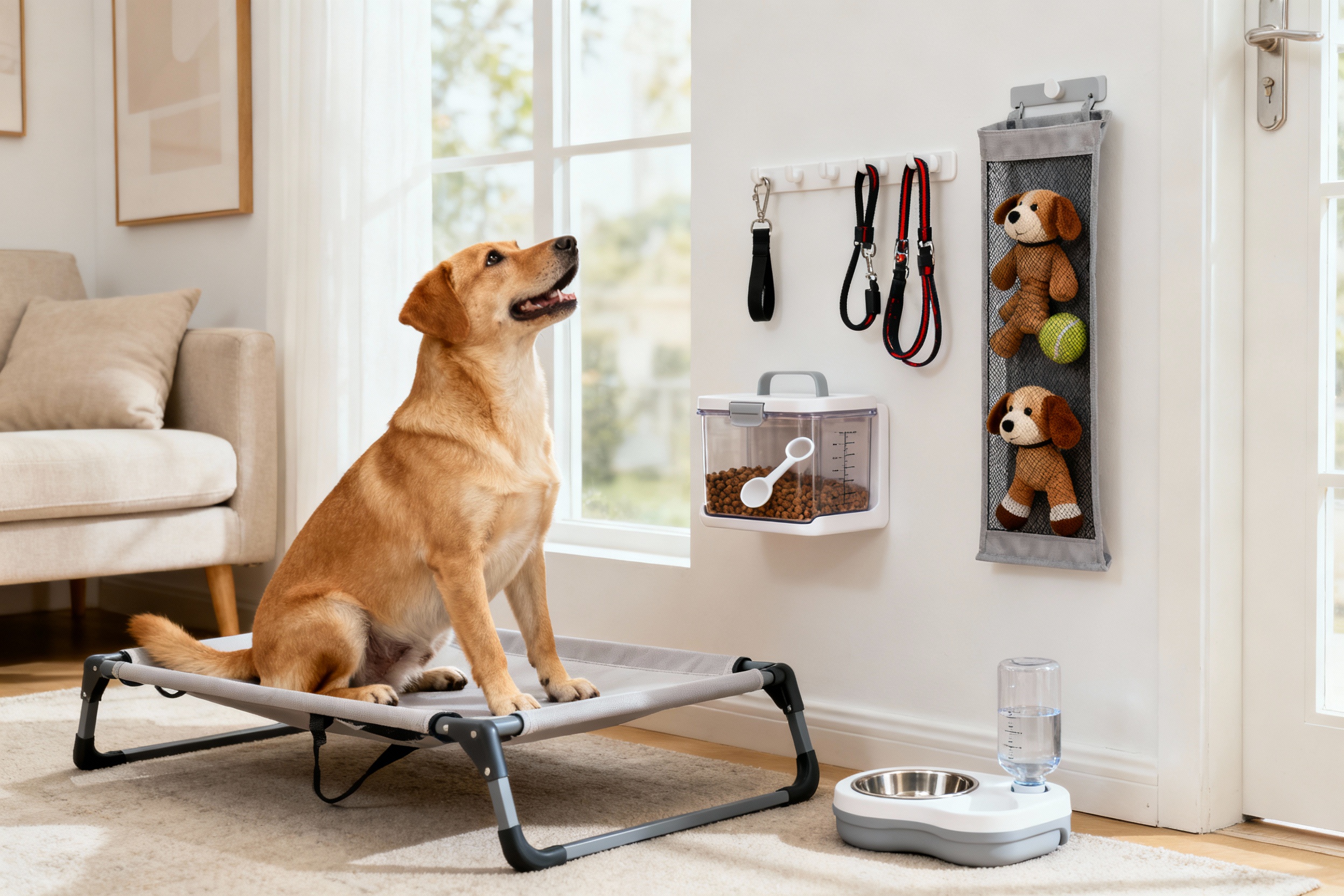
Some dogs bark because they don’t know what else to do. Creating a “safe spot” helps.
- Use a crate, playpen, or a specific room.
- Add their favorite blanket or toy.
- Play calming music or white noise.
It’s like their little zen retreat. Instead of stressing about strangers, they chill in their cozy corner.
Step 6: Teach Alternative Greetings
If your dog barks when people walk in, give them a replacement behavior.
- Train them to grab a toy when the doorbell rings.
- Teach them to go to their bed or mat.
- Reward the heck out of calm greetings.
I taught my dog to “find your ball” when someone knocks. Now she runs off, grabs it, and looks ridiculously proud. Way cuter than barking.
Step 7: Desensitization Training
This one takes patience but works long-term. Basically, you slowly expose your dog to strangers at a distance where they don’t bark.
- Start with someone standing far away.
- Reward your dog for staying calm.
- Gradually decrease the distance over time.
This helps your dog learn that strangers = treats, not threats. Kind of like teaching them, “Hey, new people are cool.”
Step 8: Tools That Can Help
I’m not saying buy everything on Amazon (though… tempting 😏), but a few tools can really help manage barking.
- Baby gates: Keep your dog away from the front door chaos.
- Window films: Block your dog’s view of strangers outside.
- Calming supplements: Some natural chews help anxious barkers.
- Training collars: Use humane options only—think vibration, not shock.
FYI: Always pair tools with training. Otherwise, it’s like slapping duct tape on a leaky pipe—it won’t last.
What NOT to Do
Let’s clear this up. Some “fixes” sound tempting but backfire fast.
- Don’t punish barking harshly. Yelling, spraying, or using shock collars just make dogs anxious.
- Don’t let them bark it out. It doesn’t “tire them out.” It just makes barking a habit.
- Don’t expect overnight results. Training takes consistency.
Think of it like learning guitar. You wouldn’t shred like Jimi Hendrix in a week, right? Same with teaching a dog not to bark.
When to Call in the Pros
Sometimes, despite your best efforts, your dog keeps barking at strangers like it’s their job. That’s when a professional trainer or behaviorist can help.
Look for:
- Certified trainers with experience in fear or aggression.
- Positive reinforcement methods only.
- One-on-one sessions for tailored advice.
IMO, professional help is worth every penny if you’re truly stuck. Peace and quiet is priceless.
Quick Recap: The Barking Fix Toolkit
Here’s your cheat sheet:
- Teach “quiet.”
- Socialize often.
- Redirect focus.
- Exercise daily.
- Create safe spaces.
- Train alternative greetings.
- Use desensitization.
- Add tools if needed.
Pretty simple when you see it all laid out, right?
Final Thoughts
Here’s the thing—dogs bark. That’s never going away completely (and honestly, we wouldn’t want it to). But constant barking at strangers? That’s fixable. With a mix of training, patience, and maybe some peanut butter bribery, you’ll get there.
And hey, if my dog can go from doorbell demon to polite greeter, yours can too. Just remember: consistency beats quick fixes every time.
So next time someone knocks, instead of cringing at the inevitable barking symphony, imagine a calmer, quieter scene. Sounds good, right? Now grab some treats and start training—you got this.
Ready to Go Deeper?
Want a smarter, more effective way to train your dog—and eliminate bad behaviors like chewing, barking, or jumping?
🎓 Try Brain Training For Dogs – a science-based program designed to boost your dog’s intelligence and create a well-behaved, calm companion.
🟢 100% online
🟢 Easy to follow
🟢 Works for all breeds & ages👉 Click here to start transforming your dog today!






Leave a Reply