You brought home a furry chaos goblin with paws. Congrats! Now let’s make sure they stay happy, healthy, and less inclined to eat your socks (no promises).
This isn’t about buying every shiny gadget—just the smart essentials that make life smoother for both of you. Ready to build your dog’s starter pack like a pro?
Affiliate Disclosure:
This post may contain affiliate links. If you click on these links and make a purchase, I may earn a small commission at no additional cost to you. Thank you for supporting this blog!
Foundations First: Food, Water, and Bowls That Don’t Stink

You can’t out-train bad nutrition. Choose a complete, balanced diet that fits your dog’s age, size, and activity level.
If you’re unsure, ask your vet and read labels like a detective. Look for real protein sources, not mystery meat confetti. Bowls matter too. Go for stainless steel or ceramic—easy to clean and less likely to harbor gunk.
Elevated stands can help larger dogs and seniors who struggle with neck strain.
Smart Feeding Upgrades
- Slow-feeder bowls: For vacuum eaters. Reduces bloat risk and teaches patience (you know, a tiny bit).
- Automatic feeders: Great for consistent schedules. Not a substitute for attention, FYI.
- Water fountains: Encourages hydration and keeps water fresher.
Collars, Harnesses, and Leashes: Control Without the Wrestle
Walking should not feel like water-skiing behind a fluffy torpedo.
The right gear changes everything.
- Flat collar: For ID tags and everyday wear. Ensure a two-finger fit.
- ID tag + microchip: Non-negotiable. Your future self will thank you.
- Harness: A front-clip harness gives better control and reduces pulling.
Avoid anything that puts pressure on the neck.
- Leash: Six-foot, non-retractable. You want control, not surprise bungee jumping.
Night Walk Safety
- Reflective gear: Collars, leashes, or vests that glow like a runway.
- LED tag lights: So you can see your dog at 5 a.m. when they decide to sniff the void.

The Training Toolkit: Brains Before Brawn
A well-trained dog = a calm house. You don’t need to be a pro trainer; you just need consistency and the right tools.
- Treat pouch: Keeps your pockets from becoming a crumb graveyard.
- High-value treats: Use tiny, soft treats that your dog would sell you for (figuratively… we hope).
- Clicker: Optional, but helpful for timing and clarity.
- Place mat: Teaches boundaries—great for “settle” during dinner.
🧠 Want a smarter, easier way to train your dog?
👉 Try Brain Training For Dogs – a proven method to stop bad behavior by boosting your dog’s intelligence.
Crate and Containment
A crate isn’t a punishment—think bedroom, not jail.
Choose one where your dog can stand, turn, and lie down. Wire crates fold and breathe well. Plastic crates feel cozy and travel-friendly. Add a washable mat or pad and you’ve got a safe den.
Toys That Work Hard: Exercise the Body and Mind
Dogs don’t need a toy box overflowing with squeakers. They need the right variety.
- Chew toys: Durable rubber or nylon for teething or anxiety.
Rotate to keep novelty high.
- Interactive puzzle toys: Food-dispensing or problem-solving toys to tire the brain (the secret sauce).
- Fetch toys: Balls, frisbees, tug ropes—pick based on your dog’s play style.
- Snuffle mat: Turns mealtime into a scent game. Slows down eating and builds confidence.
DIY Fun (Cheap and Effective)
- Freeze kibble and broth in a rubber toy for a long-lasting challenge.
- Make a “find it” game by hiding treats around a room.
- Use a muffin tin with tennis balls over treats for a beginner puzzle.
Grooming Essentials: Less Shedding, More Snuggling
Grooming doesn’t just keep your dog cute. It keeps their skin healthy and your house less… fuzzy.
- Brush for your coat type: Slicker for long hair, rubber curry for short coats, deshedding tool for undercoats.
- Nail clippers or grinder: Short nails protect joints and floors.
Aim for a weekly check, trim as needed.
- Dog-safe shampoo + wipes: Gentle formulas for sensitive skin. Wipes for quick cleanups (aka mystery puddle emergencies).
- Ear cleaner + cotton pads: Especially for floppy-ear squads.
- Toothbrush + enzymatic toothpaste: Daily is ideal; 3x weekly minimum, IMO.
Pro Tip: Make It Positive
Pair every grooming session with treats and calm praise. Start short, end happy.
You’re building a lifelong spa routine, not a wrestling tradition.
Health and Safety: Vet-Approved Basics
You don’t need a full hospital at home, but you do need the basics. Emergencies happen, and preparedness beats panic.
- First-aid kit: Gauze, non-stick pads, vet wrap, antiseptic wipes, tweezers, blunt scissors, styptic powder.
- Flea/tick/heartworm preventatives: Set monthly reminders. Skipping invites trouble.
- Poop bags (biodegradable): Because you live in a society.
- Pet insurance or a vet fund: Not glamorous, but clutch when life throws curveballs.
- Copies of records: Vaccines, meds, microchip info—store digitally and on paper.
Know Your Numbers
Keep your vet’s number, a 24/7 emergency clinic, and poison control handy.
Save them in your phone and stick them on the fridge. When you need it, you won’t want to Google.
Home Comforts: Make Your Space Dog-Friendly
Create a setup that meets your dog’s needs and protects your sanity.
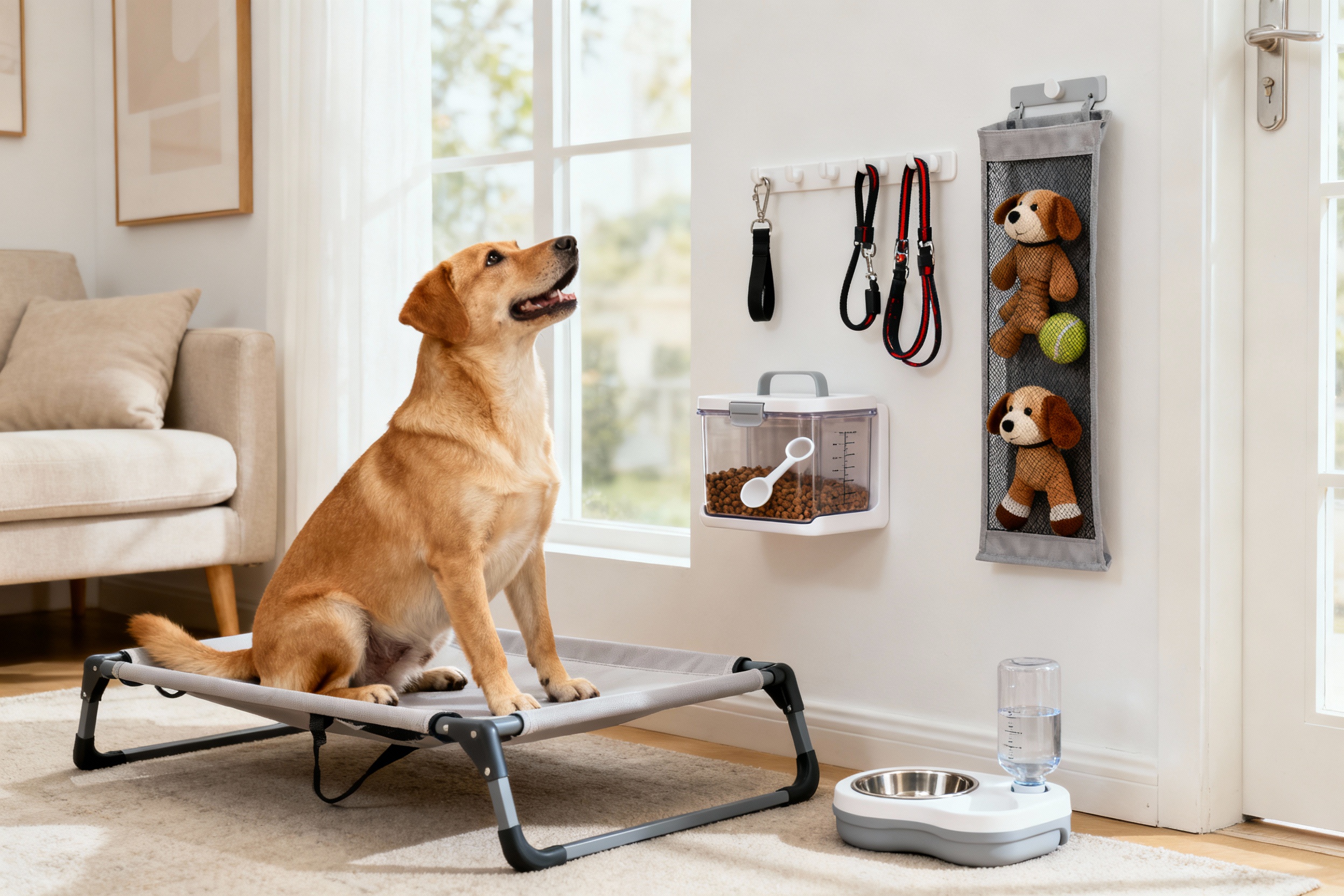
- Comfy bed or cot: Support joints and keep them off cold floors. Washable cover is a must.
- Baby gates or pens: Manage space while training.
Freedom comes after reliability.
- Storage bin for gear: Leashes, treats, wipes—grab-and-go keeps walks easy.
- Travel carrier or car harness: Safety first. Dogs become projectiles in sudden stops—no thanks.
- Deodorizing spray and laundry plan: Because dog smell is… a vibe. Not always a good one.
Enrichment at Home
Build a daily rhythm.
Morning walk, midday sniff-and-search, evening training—short, consistent bursts beat marathon chaos. Routine reduces anxiety and gives your dog a job, which means less redecorating via teeth and paws.
Nice-to-Haves That Feel Like Superpowers
Not essential, but wow do they help.
- GPS tracker: Peace of mind for escape artists.
- Pet camera: Check-ins during work, plus adorable footage of naps.
- Portable water bottle with bowl: Hikes, parks, errands—hydration on demand.
- Weather gear: Raincoat for soggy climates, booties for hot pavement or icy sidewalks.
- Allergy-friendly wipes and paw balm: Soothe seasonal itchies and protect pads.
FAQ
How many toys does my dog really need?
Quality over quantity. Aim for 5–8 in rotation: a couple of chews, a puzzle, a tug toy, and a fetch favorite. Swap weekly to keep things exciting.
Do I need a crate if I’m home a lot?
Yes, IMO.
A crate teaches independence, aids house training, and provides a safe space during guests, deliveries, or stressful moments. You can phase it out later if your dog proves trustworthy.
What’s the best treat for training?
Use soft, pea-sized bites that your dog goes nuts for—think freeze-dried meat, tiny cheese bits, or commercial training treats. Keep it high-value for new or hard behaviors and switch to lower-value for easy stuff.
How often should I bathe my dog?
Usually every 4–8 weeks, depending on coat type and lifestyle.
Wipes and spot cleaning handle the in-between. Overbathing can dry out skin, so keep it reasonable.
Is a retractable leash a bad idea?
For training and busy areas, yes. They teach pulling and reduce control.
Use a standard 6-foot leash and upgrade to long lines only when you’ve built solid recall and manners.
Do I really need pet insurance?
If surprise vet bills would wreck your budget, then yes. Insurance or a dedicated savings account helps you say “do the treatment” instead of “what are my options?” when it counts.
Conclusion
You don’t need every gadget on the internet to raise a great dog. Nail the essentials—smart nutrition, safe gear, basic training, solid grooming, and a comfy setup—and you’ve covered 90% of the happiness formula.
The rest? That’s love, routine, and a little chaos. FYI: you’ve got this, and your dog thinks you’re already the best.





Leave a Reply