You’ve decided to bring home a dog? Love it. You’re about to get a best friend who thinks you’re a five-star chef every time kibble hits a bowl.
But before those zoomies take over your living room, let’s stock up on the essentials. This isn’t about buying everything the pet store clerk waves at you—just the smart stuff that actually makes your life (and your pup’s) easier. Ready to set yourself up like a pro?
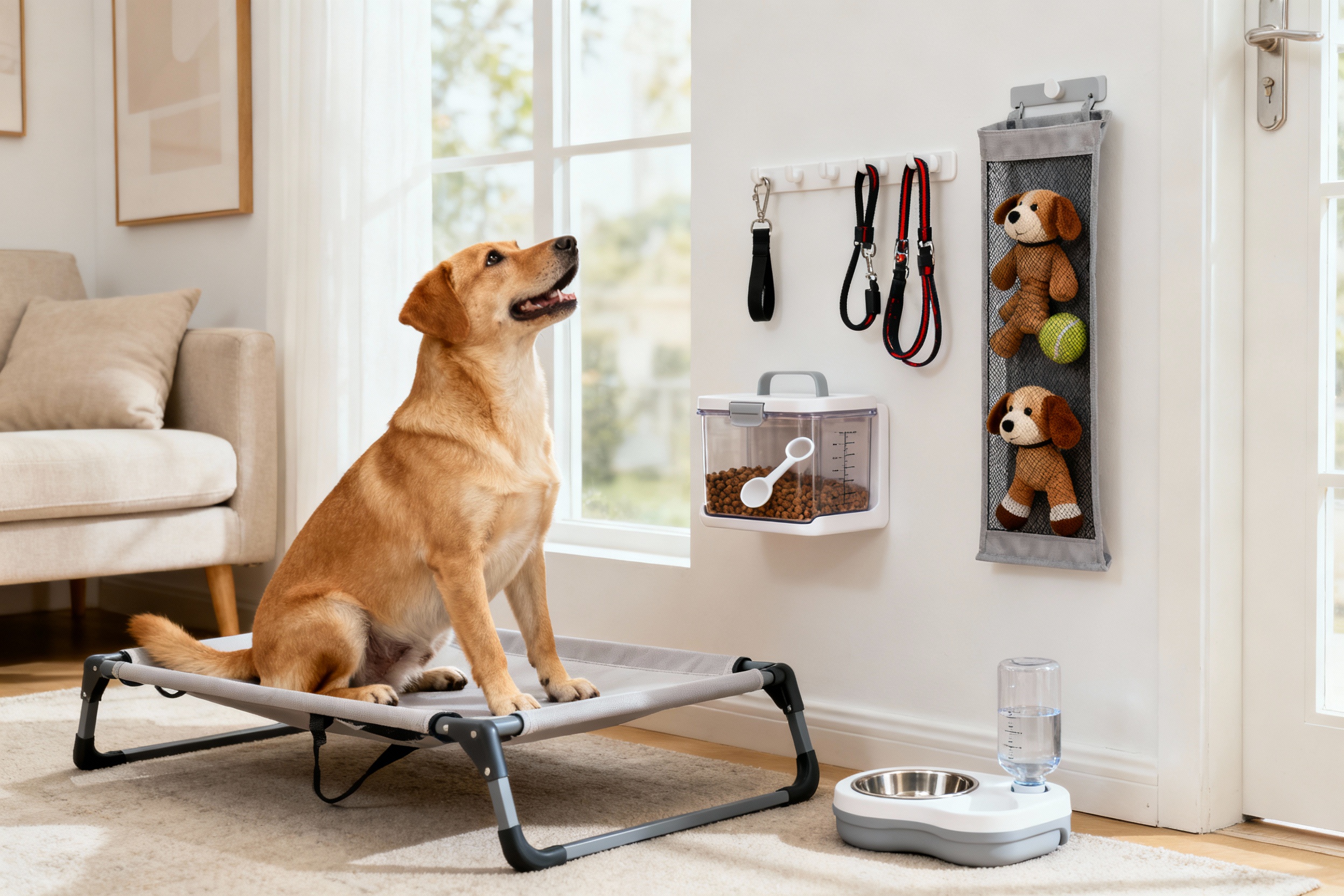
Set Up the Home Base: Crates, Beds, and Safe Zones

Your dog needs a place that screams “my spot.” A clear home base calms nerves, helps with training, and saves your shoes from “curiosity.”
- Crate: Choose a crate big enough for your dog to stand, turn, and stretch.
Wire crates offer airflow and visibility. Plastic crates work great for travel and cozy vibes.
- Bed: Go for a washable, durable bed. Puppies?
Pick something chew-resistant. Seniors? Consider orthopedic foam.
- Baby gates: Block off rooms and create safe zones while your dog learns the house rules.
Crate Training Tips
Keep it comfy with a blanket and a toy, and feed meals in the crate to build positive vibes.
Leave the door open at first so your dog explores without pressure. And no, the crate isn’t “doggy jail” when you use it right.
Food, Bowls, and Treats: The Good Stuff
Let’s talk snacks—aka your secret training currency. But first, the basics.
- Dog food: Choose a high-quality food suited for your dog’s age and size.
For puppies, look for “growth” formulas. For giant breeds, pick large-breed puppy food to support joint health.
- Bowls: Stainless steel bowls win on durability and hygiene. Elevated stands help large dogs.
Slow-feeder bowls help fast eaters avoid tummy drama.
- Treats: Get a variety—soft training treats for quick rewards and longer-lasting chews for chill time. FYI, use the tiniest treats you can; your dog cares more about frequency than chunk size.
Supplements: Do You Need Them?
Maybe. Fish oil supports skin and coat, probiotics help sensitive stomachs, and joint support (glucosamine) helps big breeds or older dogs. Always check with your vet first, IMO.

Collars, Harnesses, and Leashes: Walk Like You Mean It
You want control without discomfort—especially while your pup learns the basics.
- Flat collar: Keep ID tags here.
Choose one with a quick-release buckle. Make sure you can slip two fingers under it.
- Harness: A front-clip harness helps reduce pulling. Back-clip harnesses work for calm walkers or tiny dogs.
- Leash: Start with a 4–6 ft leash.
Skip retractables until your dog has manners (or enjoy rope burn; your call).
- ID tags + microchip: Tags help get your dog home fast. Microchips back you up if the collar slips off.
Training Add-Ons
A long line (15–30 ft) helps with recall in open areas. A treat pouch keeps rewards handy so you can celebrate that perfect sit instantly.
Toys, Enrichment, and Boredom Busters
A tired dog equals a happy human.
Rotate toys so your dog doesn’t get bored and start remodeling your couch.
- Chew toys: Rubber toys (think durable brands) and tough nylon chews satisfy that need to gnaw.
- Interactive toys: Puzzle feeders, treat-dispensing balls, and lick mats challenge their brain.
- Comfort toys: Soft plushies help nervous pups settle. Super chewers may need plush-free zones, FYI.
DIY Enrichment Ideas
Stuff a rubber toy with wet food and freeze it for a long-lasting project. Scatter kibble in the yard for a sniffari.
Use a muffin tin + tennis balls for a simple puzzle.

Grooming and Cleanup: Keep It Fresh(ish)
Even if your dog smells like corn chips (it’s a thing), you still need grooming gear. Start handling paws, ears, and mouth early so vet visits don’t feel like a WWE match.
- Brush: Match it to the coat—slicker for long coats, rubber curry for short coats, undercoat rake for heavy shedders.
- Shampoo: Gentle, dog-specific formula. Human shampoo?
Nope.
- Nail clippers or grinder: Trim small amounts weekly to build confidence.
- Toothbrush + dog toothpaste: Daily if you can, a few times a week at minimum. Dental chews help, but they don’t replace brushing.
- Poop bags + holder: Clip to the leash so you never forget. Neighbors notice, trust me.
- Enzymatic cleaner: Accidents will happen.
Enzyme cleaners beat normal sprays because they break down odor at the source.
Health and Safety: Vet Prep and First Aid
Don’t wait until something goes sideways. Build your care team and toolkit early.
- Vet appointment: Book a wellness visit within the first week for a checkup, vaccines, parasite prevention, and microchip scan.
- Pet insurance: Consider it now, before any issues start. It can save you serious money long-term.
- First-aid kit: Include gauze, non-stick pads, vet wrap, antiseptic wipes, tweezers, saline, digital thermometer, and styptic powder.
Add your vet’s and emergency clinic’s numbers.
- Flea/tick and heartworm prevention: Set reminders so you don’t miss monthly doses.
Check out some suggestions on essential Dog First Aid Kits
Household Hazards
Lock away meds, xylitol (sugar-free gum), grapes/raisins, chocolate, and certain houseplants. Secure trash cans. Cover cords if you’ve got a mouthy pup.
Boring? Yes. Necessary?
Also yes.
Training Essentials: Start Day One
You don’t need a PhD in canine psychology—just consistency and good timing.
- Treats + clicker: A clicker or a consistent “yes!” marks the exact moment your dog does the right thing.
- House-training plan: Take your dog out after waking, playing, eating, and every 1–2 hours at first. Praise like they just won an Oscar.
- Basic cues: Teach sit, down, stay, leave it, and recall. Five minutes, a few times a day, beats marathon sessions.
- Socialization: Safely expose your pup to new people, surfaces, and sounds.
Aim for positive experiences; don’t flood them.
🧠 Want a smarter, easier way to train your dog?
👉 Try Brain Training For Dogs – a proven method to stop bad behavior by boosting your dog’s intelligence.
The Biting and Chewing Phase
Redirect mouthing to a chew toy. If teeth touch skin, end play for 10 seconds. No drama, just clarity.
Consistency wins, IMO.
Check out this post for tips on How To Stop Dog Chewing
Travel and Outings: Ready for Adventures
Whether it’s a vet visit or a road trip, plan for safe rides and calm arrivals.
- Car restraint: Use a crash-tested crate or a seatbelt harness. Loose dogs become projectiles—hard pass.
- Travel bag: Pack water, collapsible bowl, poop bags, extra leash, treats, towel, and a copy of vaccine records.
- Place mat: Teach a “settle” on a mat for patios and friends’ houses. Your social life will thank you.
Budget and Timing: What to Buy Now vs Later
You don’t need to max out your credit card.
Prioritize, test, then upgrade.
Buy Before Pickup
- Crate, bed, baby gate
- Food, bowls, treats
- Collar, harness, standard leash, ID tag
- Poop bags, enzymatic cleaner
- Brush, shampoo, nail tool
- Chew toys, puzzle toy
Add After You Know Your Dog
- Specialized harness (for pullers or barrel chests)
- Slow feeder (if mealtime becomes a speedrun)
- Specific supplements (vet-recommended)
- Advanced training gear (long line, sport equipment)
FAQ
How big should the crate be?
Big enough for your dog to stand, turn around, and lie down comfortably. If you’ve got a growing puppy, use a divider panel so they don’t treat the extra space as a bathroom. Too much room slows house training.
Do I need pet insurance?
You don’t need it, but it can help a lot.
Emergencies get expensive fast, and insurance turns “yikes” bills into manageable ones. If you skip it, set aside a dedicated emergency fund instead.
How many toys do I actually need?
Start with 5–7: a couple of durable chews, one puzzle, one soft toy, one ball, and a lick mat. Rotate weekly.
Variety beats quantity, and rotation keeps old toys exciting.
What’s the best way to stop pulling on walks?
Use a front-clip harness and reward your dog for checking in and walking near you. Change direction when they pull so the payoff happens only beside you. Short, focused walks beat long frustration strolls.
How often should I bathe my dog?
Usually every 4–8 weeks, depending on coat and lifestyle.
Overbathing dries skin, so spot-clean between baths and brush regularly. If they roll in mystery goo, all bets are off.
Should I crate my dog at night?
Yes, at least during the training phase. Crating keeps them safe, helps with house training, and gives you both better sleep.
Once your dog proves trustworthy, you can transition to more freedom.
Conclusion
Set up the basics, keep your training simple and consistent, and prep for a few messes. You’ll build routines fast, and your dog will thrive when you give them structure, enrichment, and clear boundaries. Start with this checklist, tweak as you learn your pup’s quirks, and enjoy the chaos—because the best part of dog life is all the love stuffed between the muddy pawprints.





Leave a Reply